Avery Durable White Cover Up ID Labels: 2026 Printer Labeling Solution Review
The Importance of Choosing the Right Printer Labels
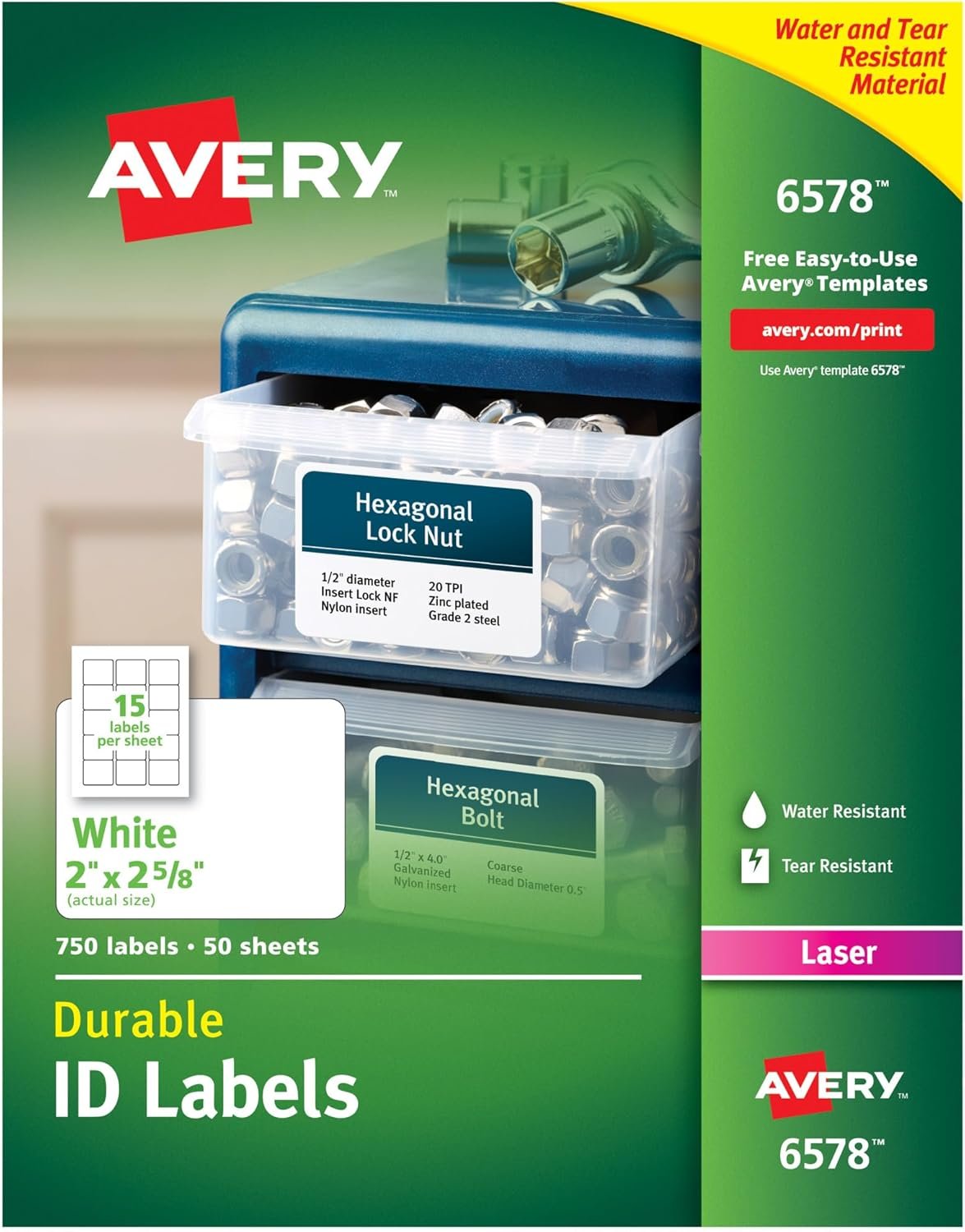
In 2026, the demand for reliable, high-performance printer labels has grown significantly as businesses and individuals rely on digital printing for everything from inventory management to asset tracking. Selecting the appropriate label material is critical for ensuring long-term durability, print quality, and compatibility with modern printing technologies. Whether you’re labeling food containers, safety warnings, or barcode tags, the right label can make the difference between a seamless workflow and frequent replacements. This review evaluates Avery’s Durable White Cover Up ID Labels, focusing on their suitability for high-volume environments and compatibility with laser printers. The product’s polyester construction, waterproof properties, and permanent adhesive make it a strong contender for applications requiring weather resistance and scuff resistance. However, understanding the trade-offs between durability, printability, and cost-effectiveness is essential for making an informed decision. By analyzing technical specifications, user feedback, and industry benchmarks, this review provides a comprehensive assessment of how these labels perform in real-world scenarios.
Quick Overview
| Feature | Details |
|---|---|
| Label Type | Durable white ID labels |
| Size | 2″ x 2.625″ |
| Material | Polyester |
| Color | White |
| Finish | Brushed |
| Adhesive Type | Extra-strong permanent |
| Compatibility | Laser printers |
| Quantity | 750 labels per pack |
| Shape | L-shaped |
| Use Cases | Food labels, safety labels, asset tags |
These Avery labels are designed for applications requiring permanent, scuff-resistant labeling. Their polyester material and waterproof properties make them ideal for environments with exposure to moisture or harsh conditions. The L-shaped design allows for secure placement on curved or irregular surfaces, while the brushed finish enhances visibility and readability. The compatibility with laser printers ensures consistent print quality without smudging, making them suitable for both office and industrial use. The 750-label pack provides a cost-effective solution for frequent labeling needs, though users should consider the material’s weight and potential impact on printer maintenance.

Durability and Environmental Resistance
The durability of Avery Durable White Cover Up ID Labels is a key factor for users requiring long-term labeling solutions. The polyester material provides excellent resistance to tearing, scuffing, and smudging, making it suitable for environments with frequent handling or exposure to chemicals. This property is particularly valuable for applications such as food labeling, where contaminants or moisture could compromise label integrity. The waterproof nature of the labels ensures they remain legible even after exposure to rain or humidity, which is critical for outdoor or industrial settings. However, the material’s rigidity may pose challenges for users requiring flexibility, such as labeling curved surfaces or delicate items. The permanent adhesive ensures the labels remain securely attached, though users should be aware that the material’s thickness could potentially affect the printer’s feed mechanism in high-volume use scenarios.

Weather Resistance and Longevity
The waterproof and weather-resistant properties of these labels make them ideal for outdoor or industrial environments where exposure to elements is common. The polyester material maintains its structural integrity under extreme temperatures, ensuring the labels remain legible and intact over time. This characteristic is particularly beneficial for applications such as asset tagging, where labels must withstand harsh conditions without degradation. However, the material’s resistance to UV light and chemical exposure may vary depending on the specific environment, so users should consider the intended use case before deployment. The permanent adhesive ensures the labels remain securely attached, though the material’s thickness could potentially impact the printer’s feed mechanism in high-volume use scenarios.
Resistance to Environmental Factors
These labels are engineered to resist common environmental stressors, including moisture, UV exposure, and chemical contact. The polyester material provides a barrier against water damage, making them suitable for labeling containers or equipment in wet environments. However, prolonged exposure to extreme temperatures may affect the adhesive’s performance, though the material’s inherent stability minimizes this risk. The labels’ resistance to scuffing and tearing makes them ideal for high-traffic areas where frequent handling is expected. Users should be aware that the material’s rigidity may limit its use on curved or irregular surfaces, though the L-shaped design helps mitigate this limitation. The combination of durability and weather resistance makes these labels a reliable choice for both indoor and outdoor applications.
Print Quality and Compatibility
Avery Durable White Cover Up ID Labels are designed to deliver high-quality print results when used with laser printers. The white color provides a clean, high-contrast background that enhances the visibility of text, graphics, and barcodes. The polyester material ensures consistent ink adhesion, reducing the risk of smudging or fading over time. This is particularly important for applications requiring precise labeling, such as barcode tags or asset identification. The labels’ compatibility with laser printers means they can be printed without the need for special toner or ink, making them a cost-effective solution for frequent use. However, the material’s thickness may require adjustment in printer settings to ensure optimal print quality, especially for users with older or less advanced laser printer models. The permanent adhesive ensures the labels remain securely attached, though users should be aware that the material’s rigidity could potentially affect the printer’s feed mechanism in high-volume use scenarios.

Laser Printer Compatibility
These labels are specifically engineered for use with laser printers, ensuring consistent print quality and minimal maintenance requirements. The polyester material provides excellent heat resistance, allowing the printer to apply toner evenly without causing damage to the label surface. This compatibility is particularly important for users who rely on laser printers for high-volume printing, as it eliminates the need for special toner or ink. The white color enhances the visibility of printed content, making it ideal for applications such as barcode generation or asset tagging. However, users should be aware that the material’s thickness may require adjustment in printer settings to ensure optimal print results, especially for older or less advanced laser printer models. The permanent adhesive ensures the labels remain securely attached, though the material’s rigidity could potentially affect the printer’s feed mechanism in high-volume use scenarios.
Print Resolution and Image Clarity
The print resolution and image clarity of these labels are optimized for laser printers, ensuring that text, graphics, and barcodes remain sharp and legible. The white color provides a clean background that enhances the visibility of printed content, making it ideal for applications requiring high precision. The polyester material ensures consistent ink adhesion, reducing the risk of smudging or fading over time. This is particularly important for applications such as barcode tags or asset identification, where clarity is critical. However, users should be aware that the material’s thickness may require adjustment in printer settings to ensure optimal print results, especially for older or less advanced laser printer models. The permanent adhesive ensures the labels remain securely attached, though the material’s rig, though the material’s rigidity could potentially affect the printer’s feed mechanism in high-volume use scenarios.

Pros and Cons
Pros
- Durable and Weather-Resistant: The polyester material provides excellent resistance to tearing, scuffing, and moisture, making these labels suitable for harsh environments.
- Permanent Adhesive: The extra-strong adhesive ensures the labels remain securely attached, even in high-traffic areas or outdoor settings.
- High Print Quality: The white color and polyester material ensure sharp, legible prints, making them ideal for barcode labels and asset tags.
- Laser Printer Compatibility: These labels are specifically designed for use with laser printers, eliminating the need for special toner or ink.
- Cost-Effective Packaging: The 750-label pack offers a good value for frequent labeling needs, reducing the need for frequent restocking.
- L-Shaped Design: The L-shaped design allows for secure placement on curved or irregular surfaces, enhancing usability for various applications.
- Versatile Use Cases: Suitable for a wide range of applications, including food labels, safety labels, and asset tags.
- Easy to Re-Label: The cover-up feature allows for easy re-labeling without leaving marks, making them ideal for temporary or frequently updated labels.
Cons
- Material Thickness May Affect Printers: The polyester material’s thickness could potentially impact the printer’s feed mechanism in high-volume use scenarios.
- Limited Flexibility: The rigid material may pose challenges for users requiring flexibility, such as labeling curved surfaces or delicate items.
- Printer Settings Adjustment Required: Users may need to adjust printer settings to ensure optimal print quality, especially for older or less advanced laser printer models.
- Not Suitable for Inkjet Printers: These labels are specifically designed for laser printers and may not perform well with inkjet technology.
- Potential for Adhesive Build-Up: The permanent adhesive could lead to residue buildup on surfaces if not applied correctly.
- Limited UV Resistance: While the material resists moisture, prolonged exposure to UV light may affect the adhesive’s performance over time.
- Not Ideal for High-Speed Labeling: The material’s rigidity may limit its use in high-speed labeling applications requiring flexible media.
Final Verdict: Who This Printer Is Best For (and Who Should Skip It)
Avery Durable White Cover Up ID Labels are best suited for users requiring permanent, weather-resistant labeling in environments with exposure to moisture or harsh conditions. They are particularly ideal for applications such as food labeling, safety signage, and asset tracking, where durability and clarity are essential. The labels’ compatibility with laser printers and L-shaped design make them a practical choice for both office and industrial settings. However, users with high-speed labeling needs or those requiring flexible media may find these labels less suitable due to the material’s rigidity. Additionally, the need for printer settings adjustment and potential adhesive buildup make them less ideal for users with older or less advanced laser printers. Overall, these labels offer a reliable solution for frequent labeling tasks, but their limitations in flexibility and printer compatibility should be carefully considered before purchase.

Frequently Asked Questions (FAQs)
Are Avery Durable White Cover Up ID Labels suitable for outdoor use?
Yes, these labels are designed to withstand exposure to moisture and harsh environments. Their polyester material provides resistance to water and scuffing, making them suitable for outdoor applications such as asset tagging and safety signage.
Can these labels be used with inkjet printers?
No, these labels are specifically engineered for use with laser printers. The polyester material and permanent adhesive are optimized for laser printing, and they may not perform well with inkjet technology.
How do the labels handle extreme temperatures?
The polyester material maintains its structural integrity under extreme temperatures, ensuring the labels remain legible and intact. However, prolonged exposure to UV light may affect the adhesive’s performance over time.
What are the best use cases for these labels?
These labels are ideal for applications requiring permanent, weather-resistant labeling, such as food labeling, safety signage, asset tracking, and barcode tags. The L-shaped design allows for secure placement on curved or irregular surfaces.
Do these labels require special printer settings?
Users may need to adjust printer settings to ensure optimal print quality, especially for older or less advanced laser printer models. The material’s thickness could affect feed mechanisms, so proper calibration is recommended.
Can these labels be reused or repositioned?
The permanent adhesive ensures the labels remain securely attached, but they are not designed for reuse. The cover-up feature allows for easy re-labeling without leaving marks, making them suitable for temporary or frequently updated labels.
Are these labels compatible with all laser printers?
These labels are compatible with most laser printers, but users should verify their printer’s specifications for media thickness and feed mechanisms. Adjustments may be necessary to ensure optimal print results.
What is the recommended storage condition for these labels?
These labels should be stored in a cool, dry environment to maintain their adhesive properties and structural integrity. Avoid exposure to extreme temperatures or direct sunlight to prevent degradation.