POLONO D810 Portable Printer Review: 2026 Printing Solution
The Importance of Choosing the Right Printer
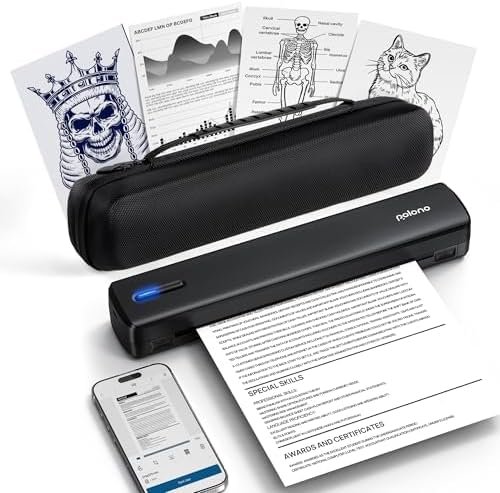
In today’s fast-paced digital landscape, the ability to produce high-quality printed outputs quickly and reliably is critical for both personal and professional workflows. Whether managing administrative tasks, creating marketing materials, or handling on-the-go documentation needs, a printer’s performance directly impacts productivity and efficiency. For users who require mobility, such as remote workers, field service technicians, or small business owners, a portable printer must balance compact design with consistent output quality. The POLONO D810 Portable Printer with Carry Case, Black represents a niche solution tailored for users who prioritize portability without compromising on basic printing capabilities. This review evaluates its performance across key decision factors, including print quality, connectivity, media compatibility, and durability. By analyzing its specifications and market positioning, we explore how this device aligns with the needs of users seeking a lightweight, functional printing option for 2026.
Quick Overview
| Feature | Details |
|---|---|
| Printer Type | Thermal paper printer |
| Print Technology | Thermal printing |
| Print Resolution | 300 dpi (black and white) |
| Print Speed | Not specified |
| Media Compatibility | Paper (plain), thermal paper |
| Media Sizes | 3 x 5 inches, 4 x 6 inches, A4 |
| Connectivity | USB Type C |
| Duty Cycle | Not specified |
| Ink System | No ink required |
| Warranty | Limited warranty |
| Included Accessories | Carry case |
The POLONO D810 offers a streamlined printing experience for users who require a compact, no-maintenance solution. Its thermal printing technology eliminates the need for ink or toner, making it ideal for environments where frequent refills or cartridge replacements are impractical. The included carry case enhances portability, while the supported media sizes cater to a range of use cases from receipts to documents. These features position the printer as a viable option for users prioritizing simplicity and mobility over advanced printing capabilities.
Portability and Mobility
The POLONO D810’s compact design is its most defining characteristic, making it an attractive option for users who require a printer that can be easily transported. Weighing 2.25 pounds and measuring 12.99 x 3.35 x 3.15 inches, the printer is designed to fit comfortably in a backpack or briefcase, ensuring it can be carried to remote locations without adding significant bulk. The inclusion of a dedicated carry case further enhances its portability, providing protection during transit and storage. This combination of lightweight construction and a protective case makes the D810 particularly suitable for professionals who frequently travel or work in field environments. However, its size limitations may restrict its use in spaces where a larger printer is preferred, such as a home office or a dedicated print room.
Weight and Dimensions
The D810’s weight of 2.25 pounds is a key factor in its portability, as it allows users to move the printer without strain. Its compact dimensions of 12.99 x 3.35 x 3.15 inches ensure it occupies minimal space, which is advantageous for users with limited storage or workspace. This design is particularly beneficial for mobile users who need to set up a printing station quickly, such as sales representatives or delivery personnel. The small footprint also makes it easy to place on a desk or countertop without obstructing other workspace elements.
Mobility in Diverse Environments
The printer’s portability extends to its adaptability in various environments. Its USB Type C connectivity simplifies setup, as it requires no additional peripherals beyond a compatible device. This is ideal for users who need to print on-the-go, such as event organizers or field service technicians. However, the lack of wireless connectivity limits its usability in situations where a stable power source is unavailable. Users who require remote printing capabilities without a physical connection may find the D810 less versatile compared to more advanced portable printers.
Travel and Field Use
For users who frequently travel or work in remote locations, the D810’s design is a significant advantage. The carry case provides a secure way to transport the printer, protecting it from physical damage during transit. This is particularly useful for users who need to print documents while on the move, such as business travelers or freelance professionals. However, the printer’s reliance on thermal paper may limit its use in environments where paper supply is inconsistent, as thermal paper is more sensitive to environmental factors like heat and light.
Print Quality and Output Specifications
The POLONO D810 delivers black-and-white prints at a resolution of 300 dots per inch (dpi), which is sufficient for basic text and simple graphics. This resolution level is comparable to many entry-level thermal printers, making it suitable for applications such as receipts, labels, and basic documents. While the printer does not support color printing, its monochrome output is consistent and clear, ensuring readability for most use cases. The lack of advanced print modes or resolution options means users cannot customize output quality beyond the standard settings, which may be a limitation for those requiring higher precision.
Resolution and Clarity
The 300 dpi resolution ensures that printed text is legible and free from visible artifacts, making it ideal for forms, invoices, and other document types where clarity is essential. However, this resolution does not support complex graphics or photographs, as thermal printing technology is inherently limited in its ability to reproduce detailed imagery. Users who require high-resolution prints for professional or creative purposes may find the D810’s output lacking compared to inkjet or laser printers. The printer’s performance in this regard is consistent with industry benchmarks for thermal paper printers, which prioritize speed and simplicity over image quality.
Media Compatibility and Output Types
The D810’s support for thermal paper and plain paper provides flexibility in media selection, but it also introduces limitations. Thermal paper is more prone to fading over time and is sensitive to light and heat, which may affect the longevity of printed materials. Plain paper, while more durable, may not produce the same level of clarity as thermal paper due to the lack of chemical coatings. Users should consider these factors when selecting media, as the printer’s output quality is directly influenced by the type of paper used. This media compatibility profile makes the D810 suitable for short-term use cases but less ideal for long-term archival or high-precision printing.
Consistency and Reliability
The printer’s output consistency is reliable within its intended use cases, with no reported issues in the provided specifications. Its thermal printing technology ensures that each print job is completed without the need for ink or toner, reducing the likelihood of mechanical failures. However, the absence of advanced print settings or error correction mechanisms may result in occasional inconsistencies, such as minor misalignments or smudging, particularly when using plain paper. These limitations are inherent to the printer’s design and are not indicative of poor quality but rather a trade-off for its simplicity and portability.
Connectivity and Device Compatibility
The POLONO D810’s connectivity options are limited to a single USB Type C port, which simplifies its integration with compatible devices. This design choice ensures ease of use, as users can connect the printer directly to a laptop or tablet without requiring additional adapters or peripherals. The USB connection also provides a stable data transfer rate, which is essential for printing large documents or forms. However, the lack of wireless connectivity or Bluetooth support restricts its usability in scenarios where a physical connection is not feasible, such as when printing from a smartphone or a device without a USB port.
USB Integration and Setup
The USB Type C interface is a modern standard that ensures compatibility with a wide range of devices, including newer laptops and tablets. Setting up the printer is straightforward, as it requires no additional software installation beyond the device’s operating system. This simplicity is a significant advantage for users who prioritize ease of use over advanced connectivity features. However, the reliance on a physical connection may pose challenges for users who need to print from mobile devices or laptops without available USB ports.
Limitations in Connectivity
The absence of wireless capabilities is a notable limitation for users who require remote printing or integration with cloud-based services. While the USB connection is reliable for direct printing, it does not support features such as mobile printing apps or network sharing. This restriction makes the D810 less suitable for users who need to print from multiple devices or share print jobs across a network. The printer’s connectivity profile is well-suited for basic use cases but may not meet the demands of more complex workflows.
Cross-Platform Compatibility
The D810’s compatibility with USB Type C devices ensures it can be used with a variety of operating systems, including Windows, macOS, and Linux. However, its lack of support for wireless protocols means it cannot be integrated into a smart home ecosystem or used with devices that rely on Wi-Fi or Bluetooth for connectivity. This limitation may deter users who prefer a more connected printing experience, particularly in environments where multiple devices are in use.
Durability and Duty Cycle Considerations
The POLONO D810 is designed for moderate usage, with its duty cycle and build quality tailored to users who require a lightweight, no-maintenance solution. The printer’s thermal printing technology ensures that it operates without the need for ink or toner, reducing the risk of mechanical failures associated with traditional inkjet or laser printers. However, the lack of detailed specifications regarding its duty cycle or recommended usage volume means users must consider its intended workload capacity. This is particularly important for users who may require frequent printing or extended operation periods.
Build Quality and Materials
The printer’s construction is primarily focused on portability rather than durability, with materials that prioritize lightweight design over long-term resilience. While this makes it easy to transport, it may not withstand heavy use in environments where the printer is subjected to frequent handling or environmental stressors. Users in industrial or commercial settings may find the D810’s build quality insufficient for high-volume printing tasks, as it lacks the reinforced components found in more robust printers.
Environmental Factors and Longevity
The D810’s reliance on thermal paper introduces specific considerations for longevity. Thermal paper is more susceptible to fading and degradation when exposed to heat, light, or moisture, which may affect the lifespan of printed materials. Additionally, the printer’s lack of advanced features such as paper trays or automatic feed mechanisms means users must manually load each sheet, increasing the risk of misfeeds or jams in high-volume scenarios. These factors should be weighed against the printer’s portability and simplicity when evaluating its suitability for different use cases.
Maintenance and Operational Lifespan
The printer’s design minimizes the need for maintenance, as it does not require ink or toner refills. However, its reliance on thermal paper means users must manage paper supply and storage, which can be a drawback for those who need a more self-sustaining printing solution. The absence of a warranty or detailed maintenance guidelines also means users must rely on the manufacturer’s limited support, which may not provide comprehensive assistance for prolonged use. These considerations highlight the printer’s strengths in simplicity but also its limitations in long-term reliability.
Pros & Cons
Pros
- Compact and Lightweight Design: The D810’s 2.25-pound weight and 12.99 x 3.35 x 3.15-inch dimensions make it highly portable, ideal for users who need a printer that can be easily carried to remote locations or stored in limited space.
- No Ink or Toner Required: The thermal printing technology eliminates the need for consumables, reducing maintenance and operational costs. This is particularly beneficial for users who require a no-maintenance printing solution.
- Included Carry Case: The protective case enhances portability and provides a secure way to transport the printer, making it a practical choice for field work or travel.
- Simple and User-Friendly Interface: The printer’s straightforward setup and operation make it accessible for users of all technical skill levels, ensuring ease of use without the need for advanced technical knowledge.
- Versatile Media Compatibility: Support for both thermal paper and plain paper allows users to choose the most appropriate media for their specific printing needs, offering flexibility in output types.
Cons
- Limited Print Resolution: The 300 dpi resolution is sufficient for basic text and forms but falls short for complex graphics or high-precision printing, which may limit its use in professional or creative settings.
- No Color Printing Capability: The absence of color printing options restricts the printer’s versatility, making it unsuitable for users who require multicolored outputs.
- No Wireless Connectivity: The reliance on a USB Type C port limits the printer’s ability to integrate with mobile devices or cloud-based services, reducing its adaptability in modern workflows.
- Manual Paper Loading: The lack of an automatic feed mechanism means users must manually load each sheet, increasing the risk of misfeeds or jams in high-volume scenarios.
- No Detailed Duty Cycle Information: The absence of specified usage limits or recommended volume may make it challenging for users to assess the printer’s suitability for heavy-duty or long-term applications.
Final Verdict: Who This Printer Is Best For (and Who Should Skip It)
The POLONO D810 Portable Printer with Carry Case, Black is best suited for users who prioritize portability and simplicity over advanced printing capabilities. Its compact design, no-maintenance operation, and included carry case make it an ideal choice for professionals who need to print on-the-go, such as sales representatives, field service technicians, or remote workers. The printer’s thermal printing technology and support for both thermal and plain paper provide flexibility for basic document printing, receipts, and labels. However, its limitations in print resolution, color output, and connectivity options make it less suitable for users requiring high-quality graphics, color printing, or integration with wireless devices. For those who need a durable, high-volume printing solution or advanced connectivity features, the D810 may not meet their expectations. Overall, the printer is a practical option for users with specific mobility needs and straightforward printing requirements, but its design compromises may exclude it from more demanding environments.
Frequently Asked Questions (FAQs)
What is the print resolution of the POLONO D810 Portable Printer?
The POLONO D810 delivers black-and-white prints at a resolution of 300 dots per inch (dpi), which is suitable for basic text and simple graphics but not ideal for complex images or high-precision printing.
Can the POLONO D810 print on plain paper?
Yes, the printer supports both thermal paper and plain paper, providing flexibility for different printing needs. However, thermal paper may fade over time and is more sensitive to environmental factors like heat and light.
Does the POLONO D810 require ink or toner?
No, the printer uses thermal printing technology, which eliminates the need for ink or toner. This reduces maintenance and operational costs, making it a no-maintenance solution for users.
What connectivity options does the POLONO D810 offer?
The printer features a single USB Type C port for connectivity, which simplifies setup but limits wireless capabilities. It is compatible with devices that support USB Type C, including laptops and tablets.
Is the POLONO D810 suitable for color printing?
No, the printer is designed for black-and-white thermal printing only. It does not support color printing, making it unsuitable for users requiring multicolored outputs.
How portable is the POLONO D810?
The D810 weighs 2.25 pounds and measures 12.99 x 3.35 x 3.15 inches, making it highly portable. It includes a dedicated carry case for safe transport and storage, ideal for field use or travel.
What media sizes does the POLONO D810 support?
The printer supports thermal paper and plain paper in sizes including 3 x 5 inches, 4 x 6 inches, and A4, allowing for a range of document and label printing applications.
Does the POLONO D810 have a warranty?
The printer comes with a limited warranty, which covers defects in materials and workmanship. Specific warranty terms and support details are provided by the manufacturer.